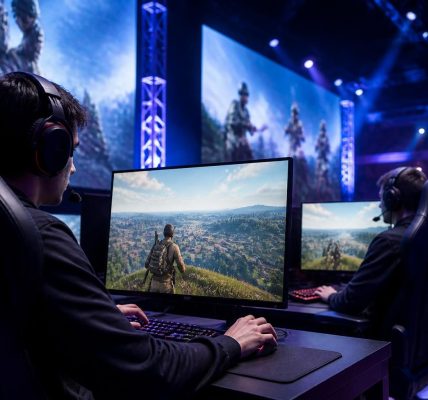
Open-world game design has transformed the gaming landscape, offering players expansive environments brimming with opportunity and exploration. From its humble beginnings to the modern innovations we see today, this genre has evolved remarkably, continually pushing the boundaries of what is possible in interactive storytelling and player agency. As players traverse vast landscapes, the appeal of open-world gaming lies not just in its scale, but in the freedom it provides to engage with the game world on their own terms.
The Origins of Open-World Game Design
The concept of open-world game design can trace its roots back to the early days of gaming. Titles such as Adventure for the Atari 2600 introduced players to non-linear exploration, even if the limitations of technology meant that the worlds were small and rudimentary. This pioneering approach was further developed in the 1980s with games like Zelda, which allowed players to explore an expansive, interconnected world, albeit within the constraints of 8-bit graphics.
As technology advanced, the concept of a truly open world began to take shape. Grand Theft Auto III, released in 2001, is often credited with revolutionizing open-world design by allowing players to navigate a fully realized city environment with unprecedented freedom. This marked a significant step forward, as the game’s intricate narrative and emergent gameplay mechanics set a new standard for player engagement and choice.
Defining Features of Open-World Games
Open-world game design is characterized by several key features that differentiate it from more linear gaming experiences. One of the most significant aspects is the presence of a vast, explorable environment filled with side quests, characters, and hidden secrets. This design choice encourages players to engage with the world at their own pace, fostering a sense of immersion and personal investment.
Another defining feature is the non-linear gameplay structure, which empowers players to dictate their own paths. Games like The Witcher 3: Wild Hunt and Breath of the Wild exemplify this flexibility, allowing players to approach challenges and storylines in their own unique ways. This level of freedom creates a personalized gaming experience, as players forge their own stories within the framework of the game world.
Technological Innovations in Open-World Design
The evolution of open-world game design has been closely linked to advancements in technology. Graphics engines and processing power have greatly improved, enabling developers to create richly detailed worlds that feel alive and dynamic. For instance, the use of procedural generation techniques has allowed for the creation of vast landscapes with minimal manual input, as seen in games like No Man’s Sky.
Additionally, the implementation of AI has transformed how players interact with the game world. Sophisticated NPC behavior can make towns and cities feel populated and varied. In Red Dead Redemption 2, for example, the NPCs exhibit complex routines that contribute to the game’s immersive realism. Such innovations highlight how open-world game design continues to evolve, creating deeper, more engaging experiences for players.
The Role of Narrative in Open-World Games
Narrative plays a critical role in open-world game design, providing context and motivation for exploration. Unlike traditional linear narratives, open-world games often feature multiple storylines and character arcs, allowing players to delve into various plots as they explore. This narrative complexity can foster emotional connections to the game world and its inhabitants.
Furthermore, the integration of player choices into the narrative can lead to deeply personalized experiences. The choices made can result in different outcomes and endings, enhancing replayability. Games like Mass Effect and Fallout series have successfully utilized this approach, offering players meaningful consequences based on their decisions. This emphasis on narrative depth reinforces the importance of storytelling in open-world design.
Future Directions of Open-World Game Design
As we look to the future, open-world game design is poised for further evolution. Emerging technologies such as virtual reality (VR) and augmented reality (AR) offer exciting possibilities for creating even more immersive experiences. Developers are exploring ways to integrate VR into open-world environments, allowing players to experience these vast landscapes in unprecedented ways, potentially transforming the nature of exploration and interaction.
Additionally, the rise of cloud gaming and increased accessibility to high-speed internet may enable larger, more interconnected worlds that could evolve in real-time. Players could inhabit a game world that is constantly changing and adapting, leading to a more dynamic gaming experience. Innovations like these suggest that the future of open-world game design will continue to surprise and engage players in ways we are only beginning to imagine.
In conclusion, open-world game design has undergone significant transformations since its inception, evolving from simple exploration to complex, immersive experiences. The defining features of freedom, non-linearity, and narrative depth continue to draw players into these expansive worlds. As technology advances, the possibilities for what open-world games can achieve are virtually limitless. The journey of open-world game design remains an exciting story of innovation and exploration, inviting both players and developers to shape its next chapter together. For those interested in the gaming landscape, staying updated on trends through platforms like luxury138 can provide valuable insights into the future of this captivating genre.